
Building effective hockey line combinations can be the difference between a chaotic bench and a well-oiled machine. Organized lines keep players fresh, maximize individual strengths, and create chemistry that translates directly into goals, defensive stability, and game control.
Whether you’re coaching youth hockey, high school, travel teams, or adult leagues, learning how to organize hockey lines strategically will elevate your team’s performance.
Below is a step-by-step framework for building stronger, more effective line combinations.
Step 1: Know Your Players Inside and Out
Before organizing hockey lines, you must understand your roster.
Start by identifying each player’s:
- Primary position (LW, C, RW, LD, RD, G)
- Playing style (playmaker, sniper, grinder, two-way forward)
- Strengths (speed, puck control, hockey IQ, physicality)
- Weaknesses (defensive coverage, conditioning, decision-making)
- Chemistry (who naturally plays well together)
Great line combinations are not random. They are intentional pairings built around complementary skills.
If you don’t clearly understand your players’ roles, even the most talented roster will struggle with consistency.
Step 2: Build Balanced Forward Lines
Successful forward lines typically combine different skill sets rather than stacking identical players together.
A balanced line often includes:
- Speed – A skater who can pressure defense and create space
- Playmaking – A player who sees the ice and distributes effectively
- Finishing – A shooter who can capitalize on scoring chances
Example Forward Structure
Line 1:
Top scorers and strongest puck movers — used against the opponent’s best.
Line 2:
Secondary scoring with responsible two-way play.
Line 3:
Energy line focused on forechecking, physical play, and momentum.
For youth hockey, balancing lines rather than stacking one dominant unit often leads to better overall team development and fair ice time.
Step 3: Pair Complementary Defensemen
Defensive pairings should function as partnerships.
Strong defensive pairs typically include:
- One puck-moving defenseman
- One stay-at-home defender
- Balanced handedness (left/right shot when possible)
- Strong communication and coverage awareness
Avoid pairing two overly aggressive defensemen or two passive players together. Balance creates stability.
Defensive chemistry is just as important as forward chemistry.
Step 4: Organize Special Teams in Advance
Special teams should never be assembled on the fly.
Power Play Units
Look for:
- Skilled puck handlers
- Confident shooters
- Strong net-front presence
- Quarterback-style defenseman
Penalty Kill Units
Focus on:
- Strong defensive awareness
- High work rate
- Quick clears
- Reliable decision-making
Having these units organized before puck drop prevents panic adjustments during critical moments.
Step 5: Manage Shift Length & Rotation Strategy
Even perfectly built lines fail if managed poorly.
General shift guidelines:
- Forwards: 30–50 seconds
- Defense: 45–60 seconds
Short shifts maintain energy and reduce defensive breakdowns.
Also consider:
- Matching lines against opponent strengths
- Adjusting in real time based on performance
- Shortening the bench strategically late in games
Rotation discipline is just as important as line construction.
Step 6: Use the Right System to Organize Lines
While pen and paper technically works, it becomes inefficient over time.
Common issues with handwritten line sheets:
- Duplicate player assignments
- Hard-to-read handwriting
- Lost lineup sheets
- No saved versions for future games
- Messy last-minute edits
A digital hockey lineup builder eliminates these problems.
With the Hockey Lineup Builder inside Hockey Lineup Manager, you can:
- Assign players to LW, C, RW, LD, RD, and G
- Build multiple forward lines and defensive pairings
- Save alternate line combinations
- Adjust instantly for injuries or absences
- Export professional printable lineup sheets
- Prevent duplicate player assignments
Instead of rewriting lines every game, you refine and improve them.
Why Organization Improves Team Performance
Clear line combinations create:
- Defined player roles
- Better communication
- Stronger chemistry
- Cleaner line changes
- Increased confidence
Players perform better when they understand expectations.
An organized bench is a calm bench.
Youth Hockey vs Competitive Programs
In youth hockey, line building often prioritizes:
- Balanced development
- Equal opportunity
- Skill pairing for growth
In competitive programs, line building may focus more heavily on:
- Matchups
- Situational deployment
- Special teams depth
- End-of-game strategy
Regardless of level, structured organization always wins over improvisation.
Common Line Building Mistakes
Avoid these pitfalls:
- Stacking one line and weakening the rest
- Ignoring defensive balance
- Failing to adjust for opponent style
- Making changes too frequently
- Overcomplicating combinations
Consistency builds chemistry. Constant changes disrupt rhythm.
Modern Coaching Requires Modern Tools
Today’s coaches juggle:
- Practice planning
- Tournament schedules
- Parent communication
- Ice time fairness
- Official paperwork
Trying to manage line combinations manually adds unnecessary stress.
That’s why many coaches now use integrated tools like Hockey Lineup Manager — combining lineup building, practice planning, cross-ice rotations, and scoresheet stickers in one streamlined system.
Less chaos.
More clarity.
Better performance.
Final Thoughts
Organizing hockey lines is both an art and a science.
Know your players.
Build balanced combinations.
Pair complementary defenders.
Prepare special teams.
Manage shifts strategically.
Use tools that simplify the process.
When your lines are structured and intentional, your team plays faster, smarter, and more confidently.
If you’re ready to organize your line combinations digitally and eliminate game-day stress, the Hockey Lineup Builder inside Hockey Lineup Manager gives you the structure you need — every game, all season.
Related Posts
 Best Hockey Coaching Software for 2025 – Top Tools for Coaches
 HockeyApps.com – The Ultimate Tools for Hockey Coaches
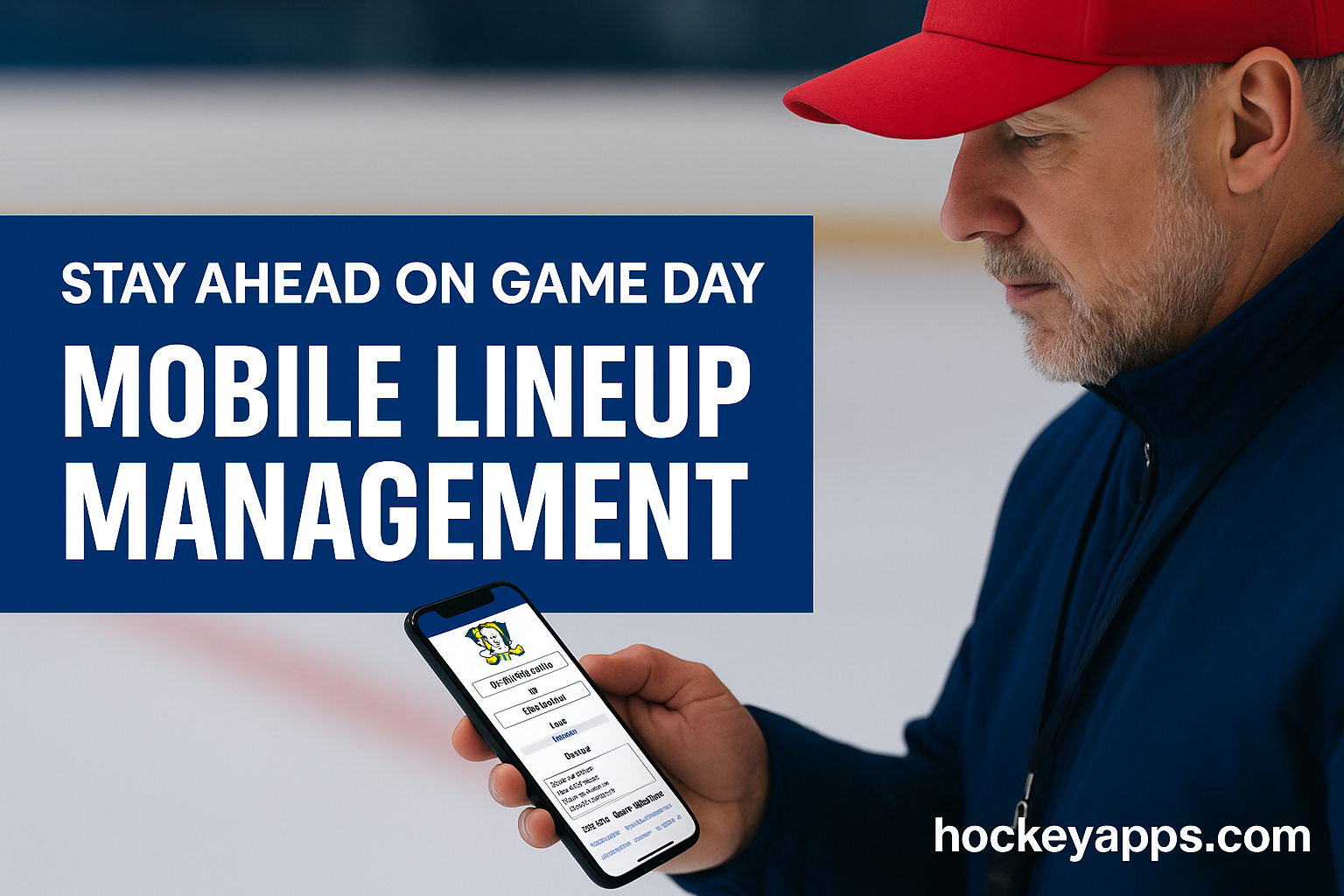 Hockey Lineup Sheet Generator – Create & Export in Seconds